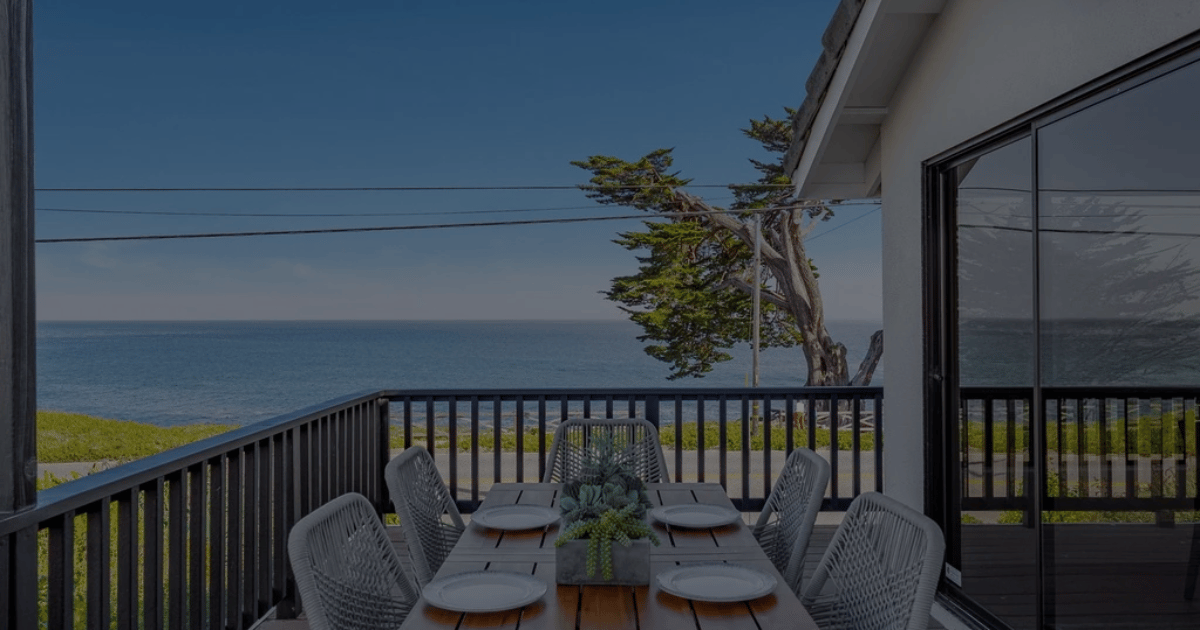
Santa Cruz has never been defined by only one thing.
It is a coastal city, a university town, a historic center of industry, a surf destination, a creative community, and a place where neighborhoods can feel remarkably different within only a few miles.
That variety has helped shape the history of Santa Cruz real estate.
The homes tell the story. Victorians near downtown reflect the city’s early growth. Craftsman houses and cottages speak to the rise of seaside living. Mid-century neighborhoods developed as Santa Cruz expanded, while contemporary coastal properties reflect the continued demand for ocean access, natural beauty, and a lifestyle that remains difficult to recreate elsewhere.
West Side Santa Cruz has become one of the most sought-after parts of the city, while Aptos continues to attract buyers looking for beaches, redwoods, established neighborhoods, and a slightly quieter coastal setting.
Markets change. Mortgage rates rise and fall. Storms reshape parts of the coastline. Individual neighborhoods move at different speeds.
Yet Santa Cruz homes continue to command attention because the fundamental appeal of the area has remained remarkably consistent.
The Story of Santa Cruz Began Long Before It Became a City
The history of Santa Cruz did not begin with real estate development, the Boardwalk, or the university.
Indigenous people have lived in the Santa Cruz region for more than 10,000 years. The people of this area spoke Awaswas, one of the languages within the broader Ohlone cultural region. Their communities developed a deep knowledge of the coastline, redwood forests, waterways, grasslands, plants, and wildlife long before Spanish colonization altered the region.
During the Spanish and Mexican periods, Mission Santa Cruz and the settlement of Branciforte reshaped the region. Following California’s transition into the American period, Santa Cruz began developing around agriculture, lumber, leather tanning, lime production, shipping, and trade.
Santa Cruz was incorporated as a town in 1866 and received its city charter in 1876. By then, its location between the mountains and Monterey Bay had already made it important for both industry and transportation.
Those early industries influenced where people lived, where roads were built, and how the city expanded. They also helped establish the neighborhoods that would eventually become some of the most recognizable areas in Santa Cruz real estate.
Lime, Lumber, and the Early West Side
The history of West Side Santa Cruz is closely connected to the Cowell Ranch and the lime industry.
Limestone was quarried in the hills above the city and processed in large kilns. The operation included quarrying, lumbering, barrel making, transportation, warehouses, a wharf, and schooners that carried finished lime to San Francisco.
By the late nineteenth century, the Davis and Cowell Lime Company controlled approximately 12,000 acres and operated one of the largest lime businesses of its kind on the West Coast. Some of the lime kilns continued operating until 1946.
This history remains visible today.
The former Cowell Ranch eventually became the setting for the University of California, Santa Cruz. The property was selected for the campus in 1961, and the university welcomed its first students in 1965. What had once been an industrial and agricultural landscape became one of California’s most distinctive university campuses.
The arrival of UC Santa Cruz helped transform the city. It created employment, attracted faculty and researchers, added cultural and educational resources, and brought new residents into the community. Fall 2025 enrollment exceeded 20,000 students, demonstrating the university’s scale and continuing influence on Santa Cruz housing.
For West Side real estate, the university remains an important part of the neighborhood’s appeal. Buyers may be drawn to the area for its proximity to the campus, the coast, employment centers, outdoor recreation, or the distinctive character of the surrounding streets.
Santa Cruz Becomes a Seaside Destination
Industry helped build Santa Cruz, but tourism helped shape its identity.
The earliest beach attractions began appearing near the mouth of the San Lorenzo River in the nineteenth century. Rail service made the coast more accessible, and Santa Cruz gradually became a destination for visitors escaping inland heat.
After an earlier casino was destroyed by fire, a new casino complex opened in 1907. The Santa Cruz Beach Boardwalk traces its official history to that year and remains one of the oldest surviving seaside amusement parks in California. The Looff Carousel arrived in 1911, followed by the Giant Dipper in 1924.
The growth of seaside tourism increased interest in cottages, vacation homes, boarding houses, hotels, and residential neighborhoods near the coast.
Over time, properties that may once have been considered modest beach houses became increasingly valuable because their locations could not be reproduced. The ocean, cliffs, established streets, and limited amount of buildable land created a natural scarcity that continues to influence Santa Cruz real estate today.
How West Side Santa Cruz Became One of the City’s Most Desirable Markets
West Side Santa Cruz does not have one single housing style or one single buyer profile.
The neighborhood includes classic cottages, Craftsman homes, postwar houses, larger residences near Westlake, properties closer to UC Santa Cruz, and contemporary homes near the coast. The Circles, Lower Westside, King Street corridor, Westlake, Natural Bridges, and UCSC-adjacent areas each have their own patterns of demand.
Part of the appeal comes from access to several different versions of Santa Cruz life.
Residents can be close to the university, neighborhood businesses, local restaurants, coffee shops, breweries, parks, open space, West Cliff Drive, and the coastline. Natural Bridges State Beach adds tide pools, a wave-carved sea arch, a monarch butterfly preserve, and views of marine wildlife to the neighborhood’s everyday surroundings.
The West Side also offers something increasingly difficult to find in California: a residential neighborhood that feels connected to both nature and a functioning city.
That combination supports demand for West Side real estate, but it does not mean every property should be valued the same way.
A home near West Cliff may appeal to buyers for different reasons than a home near UCSC. A smaller remodeled cottage can outperform a larger property that needs significant work. Lot orientation, natural light, parking, condition, architecture, insurance considerations, street activity, and proximity to the coast can all affect the result.
This is why a West Side Santa Cruz home should not be priced using a broad citywide average alone.
Aptos Grew From Railroads, Lumber, and Coastal Travel
Aptos followed a different path, but its history is also tied to transportation, natural resources, and the coast.
The railroad reached the Aptos area during the 1870s, opening new possibilities for shipping, travel, and development. By the 1880s, the Loma Prieta lumber operation had established a large sawmill in Aptos Canyon.
Between 1883 and 1923, the Aptos logging industry produced approximately 140 million board feet of lumber. The community grew to include hotels, saloons, rail facilities, businesses, and a pier used for transportation and commerce.
As the lumber era ended, Aptos gradually became more residential.
Neighborhoods developed around Aptos Village, Rio del Mar, Seacliff, the hills, and the redwood-lined areas farther inland. Today, Aptos real estate includes ocean-view homes, beach cottages, townhomes, condominiums, rural properties, and established residential neighborhoods surrounded by trees.
Buyers considering Aptos homes may be attracted to Seacliff State Beach, Rio del Mar State Beach, The Forest of Nisene Marks, Aptos Village, Cabrillo College, neighborhood restaurants, and access to Highway 1.
The result is a real estate market with multiple micro-markets, much like Santa Cruz itself.
Why Santa Cruz Real Estate Has Grown So Much
The long-term growth of Santa Cruz real estate is not the result of one single factor.
It comes from a combination of limited supply, coastal geography, employment access, university demand, lifestyle, and the enduring desirability of living near Monterey Bay.
The Federal Housing Finance Agency’s all-transactions house price index for the Santa Cruz-Watsonville metropolitan area reached 460.83 in the second quarter of 2026. Because the index uses the first quarter of 1995 as a base of 100, that means the regional index has grown to more than 4.6 times its 1995 level.
That does not mean prices increased every year.
Santa Cruz real estate has experienced recessions, interest-rate changes, inventory fluctuations, natural disasters, credit-market disruptions, and periods when some properties lost value. Real estate growth is rarely a straight line.
The longer view, however, shows how strongly demand and scarcity have supported housing values.
The U.S. Census Bureau reported a median value of approximately $1.209 million for owner-occupied housing units in the City of Santa Cruz during the 2020 through 2024 reporting period.
More recent market estimates show that values remain elevated. As of October 31, 2026, Zillow estimated the average Santa Cruz home value at approximately $1.35 million, an increase of 5.3 percent from one year earlier. Homes going pending took approximately 26 days, although individual results varied significantly by location, condition, and price.
In Aptos, Zillow estimated the average home value at approximately $1.32 million as of September 30, 2026, up 2.9 percent year over year. The average time to pending was approximately 33 days.
These numbers provide context, but homeowners should not use them as a substitute for a property-specific analysis.
An automated average cannot fully account for a West Side home’s setting, architecture, improvements, lot, coastal exposure, floor plan, views, or relationship to recent neighborhood sales.
Why Buyers Continue to Choose Santa Cruz Homes
The most durable part of Santa Cruz real estate is not a statistic. It is the lifestyle buyers believe they are purchasing along with the home.
The Coast Is Part of Everyday Life
In many places, the beach is a destination. In Santa Cruz County, it can become part of a normal routine.
People surf before work, follow West Cliff in the evening, visit tide pools, spend weekends at local beaches, or drive along the coast simply because it is nearby.
That daily relationship with the ocean gives Santa Cruz homes an emotional appeal that is difficult to measure through square footage alone.
The Landscape Changes Within Minutes
Santa Cruz County offers beaches, redwood forests, open spaces, agricultural land, hills, and urban neighborhoods within a relatively compact area.
Someone can spend the morning near the ocean and the afternoon under the redwoods. Aptos residents can access coastal neighborhoods as well as The Forest of Nisene Marks. West Side residents can move between the coastline, UCSC, and the center of Santa Cruz without leaving the city.
Santa Cruz Has Its Own Identity
Santa Cruz is connected to Silicon Valley and the greater Bay Area, but it does not feel interchangeable with them.
Its identity comes from surfing, environmental stewardship, local businesses, arts, music, outdoor recreation, university life, and the character of its neighborhoods.
Buyers relocating from the Bay Area often recognize that distinction. They may still need access to Silicon Valley, but they also want more space, a closer relationship with nature, or a different pace of daily life.
Buildable Land Is Limited
Santa Cruz is bordered by the Pacific Ocean, the Santa Cruz Mountains, protected open space, agricultural land, and established development.
Those boundaries limit how much housing can be added, particularly in the most desirable coastal neighborhoods.
Limited supply does not guarantee that every home will appreciate or sell quickly. It does, however, help explain why well-positioned Santa Cruz homes can continue attracting attention even when borrowing costs rise or the national market slows.
A Community Shaped by Resilience
Santa Cruz County’s history also includes storms, fires, earthquakes, flooding, erosion, and changing coastal conditions.
Aptos experienced major storms long before today’s coastal planning conversations. The community’s historic pier was destroyed by a storm in 1889. More than a century later, severe weather continues to test beaches, roads, bluffs, piers, and coastal infrastructure.
The 1989 Loma Prieta earthquake caused extensive damage throughout the region, including the destruction of much of historic downtown Santa Cruz. Roads became impassable, utilities were interrupted, and many homes and businesses were damaged. The city rebuilt, and downtown eventually emerged as a renewed center of local business, dining, culture, and community life.
In January 2023, powerful storms and large swells severely damaged portions of West Cliff Drive, including sections of roadway, the coastal path, protective infrastructure, utilities, and public access points.
The response did not end with temporary repairs. The City of Santa Cruz developed recovery and resilience plans involving road stabilization, path improvements, drainage infrastructure, public engagement, and longer-term coastal adaptation. City planning continued into 2026, including additional West Cliff projects and a community vision for the corridor.
That work illustrates what resilience actually means.
It does not mean ignoring risk or pretending coastal conditions will never change. It means understanding vulnerabilities, repairing damage, improving infrastructure, and planning for the future.
Buyers considering coastal Santa Cruz homes should still investigate insurance, drainage, erosion, flood zones, geological conditions, utilities, and property-specific risks. Those considerations are part of responsible coastal homeownership.
The continued appeal of the area comes from the fact that people remain deeply connected to it. Residents advocate for the coastline, support local businesses, repair damaged places, and keep investing in the community.
What Makes West Side Real Estate Different?
West Side real estate deserves its own strategy because it is not a uniform market.
A citywide report may show whether Santa Cruz inventory is rising or falling, but it may not explain what buyers will pay for a remodeled home near Natural Bridges, a property close to West Cliff, or a larger residence near Westlake.
Recent neighborhood sales are important, but so are the differences between those properties.
For example:
- Was the home fully prepared before it reached the market?
- Did it have views or stronger natural light?
- Was the architecture distinctive?
- Did the floor plan match current buyer preferences?
- Was the outdoor space usable and private?
- Did coastal exposure affect insurance or maintenance?
- Was the home priced to generate competition?
- Did the marketing communicate the lifestyle as well as the physical features?
- Were there off-market or private sales that changed buyer expectations?
The answers can create a substantial difference in value.
West Side market data can also be distorted when only a small number of properties close within a given month or quarter. One unusual sale can make a neighborhood median appear to rise or fall dramatically.
That is why experienced local interpretation matters.
Selling a Home on the West Side of Santa Cruz
Homeowners searching for information about selling on the West Side are often trying to answer one of several questions:
- What is my West Side Santa Cruz home worth?
- Is now a good time to sell?
- Should I renovate before listing?
- Which improvements will buyers actually notice?
- Will my home attract multiple offers?
- How should my property be marketed?
- Which Santa Cruz real estate agent understands the West Side?
- Should I sell privately or bring the home to the open market?
There is no single answer that works for every property.
One seller may benefit from painting, landscaping, staging, and targeted improvements. Another may be better served by entering the market quickly without completing a major renovation. A third property may have enough privacy or architectural distinction to benefit from a quieter pre-market introduction.
The correct strategy depends on the property, current competition, buyer behavior, timing, cost, and the seller’s goals.
Ben Strock and the Strock Team approach West Side real estate at the property level. The conversation begins with understanding what the homeowner wants to accomplish, then evaluating how the home fits into its specific micro-market.
That may include:
- Reviewing recent West Side sales and active competition
- Identifying meaningful property differences
- Recommending preparation with a clear return in mind
- Coordinating vendors and presentation
- Developing a pricing strategy
- Creating photography, video, digital marketing, and buyer outreach
- Introducing the property to the team’s database and agent network
- Managing showing activity, offers, negotiations, and the closing process
The goal is not simply to place a home online.
The goal is to position it so buyers understand why it is worth seeing, why it is different, and why they should act.
Should You Renovate Before Selling a West Side Home?
Not necessarily.
This is one of the most common questions homeowners ask before selling Santa Cruz homes.
Some improvements can make a significant difference. Fresh paint, thoughtful landscaping, lighting, repairs, professional cleaning, and staging may improve the way buyers experience a property without requiring a complete remodel.
Major renovations require more careful analysis.
A seller may spend heavily on finishes that do not match buyer preferences, encounter construction delays, or enter a different market by the time the work is complete. In other cases, a targeted renovation can materially improve the property’s position.
The decision should be based on likely buyer response, not on a generic list of recommended upgrades.
Before beginning a large project, speak with a local agent who understands West Side Santa Cruz. The best advice may be to improve the home, simplify the plan, or sell it in its current condition.
Is West Side Santa Cruz Still in Demand?
Demand changes by price point and property type, but West Side Santa Cruz continues to benefit from characteristics that remain difficult to duplicate.
It offers proximity to the coast, UC Santa Cruz, Natural Bridges, West Cliff Drive, local businesses, open space, and established residential streets. It also has a limited number of homes available at any one time.
Buyers have become more selective, particularly when mortgage rates are elevated. They are comparing condition, location, price, insurance, and long-term maintenance more carefully.
That selectivity makes preparation and positioning more important.
A desirable location can attract buyers, but location alone does not guarantee the best possible result. The home still needs to enter the market with a strategy appropriate for its condition, competition, and likely audience.
Is Aptos Real Estate Different From Santa Cruz Real Estate?
Yes, although the two markets share many of the same coastal influences.
Aptos real estate includes a wide range of settings, from beach neighborhoods and condominiums to larger properties near the redwoods. Rio del Mar, Seacliff, Aptos Village, Seascape, and the inland areas can perform differently from one another.
The City of Santa Cruz has its own mix of downtown neighborhoods, the West Side, the Eastside, beach areas, university-related demand, and historic housing.
A buyer comparing Aptos with West Side Santa Cruz may be choosing between different lifestyles, property types, commute patterns, and neighborhood settings rather than simply comparing prices.
For sellers, that means marketing should reflect why the property belongs in its specific location. An Aptos home should not be presented as though it were interchangeable with a West Side property, and a West Side home should not rely only on broad Santa Cruz County real estate statistics.
Why Local Knowledge Matters More in a Selective Market
In a rapidly rising market, sellers may be able to overlook certain details and still receive strong interest.
In a selective market, those details become more visible.
Buyers notice when a home feels overpriced. They notice deferred maintenance, inconsistent presentation, dark photography, unclear floor plans, and marketing that fails to communicate the setting.
They also notice when a home feels thoughtfully prepared and correctly positioned.
This is where local knowledge becomes practical.
Ben Strock, a Santa Cruz real estate agent with extensive experience across Santa Cruz County, understands that selling a coastal property involves more than choosing a number from an automated estimate.
For someone searching online for “Ben Strock Santa Cruz real estate agent,” the more useful question is not simply how long an agent has worked in the area. It is how that experience will shape the strategy for your particular property.
Does the agent understand why buyers choose West Side Santa Cruz?
Can the agent explain the difference between nearby micro-markets?
Can the team coordinate preparation without creating unnecessary work?
Can the marketing tell the story of the property and its setting?
Can the agent interpret buyer feedback and adjust when necessary?
Can the team expose the home to the widest relevant audience while managing the details behind the scenes?
Those are the questions that influence the experience and, potentially, the final result.
The Enduring Appeal of Santa Cruz Homes
Santa Cruz has changed considerably since the days of lime kilns, lumber mills, rail travel, seaside bathhouses, and early beach cottages.
The university grew out of a former ranch. Industrial land became residential neighborhoods and cultural centers. Downtown rebuilt after a major earthquake. Coastal infrastructure continues to evolve in response to storms and changing conditions.
Through every chapter, people have continued to be drawn to the same fundamental qualities: the ocean, redwoods, climate, creativity, recreation, community, and sense of place.
That is the deeper story of Santa Cruz real estate.
It is not simply that property values have grown. It is that demand has endured because people continue to want the life connected to these homes.
For West Side homeowners, that history creates an opportunity, but it also creates responsibility. The value of a property should be understood in the context of its architecture, condition, neighborhood, coastal setting, and the buyers searching for it today.
A broad online estimate can provide a starting point. A thoughtful local strategy can reveal much more.
Thinking About Selling on the West Side?
If you own a home in West Side Santa Cruz and are considering a sale, you do not need to begin by committing to a listing date.
Begin with a conversation.
Ben Strock and the Strock Team can help you understand your current value, recent neighborhood sales, buyer demand, possible improvements, pricing options, and the timing that best supports your next move.
Every Santa Cruz home has its own history. The right selling strategy should begin there.
To discuss selling your West Side Santa Cruz home, 📲 call or text us at 831-688-9800.
Strock Team | eXp Luxury | Where Remarkable Real Estate Lives in California
Santa Cruz County · Monterey Bay · Silicon Valley | 831-688-9800 | strockteam.com